


Keynote Speakers
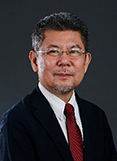
Prof. Dr. KAHAR BIN OSMAN
Faculty Of Engineering, Universiti Teknologi Malaysia
Fellow at IJN-UTM Cardiovascular Engineering Centre,
Universiti Teknologi Malaysia, Malaysia
Prof. Dr. Kahar Osman is a Professor at the Faculty of Engineering, UTM, Malaysia. He is active in the Computational Fluid Mechanics Group and IJN-UTM Cardiovascular Engineering Center. His research interests include applications of computational fluid mechanics (CFD), fluid-structure interaction (FSI) and experimental techniques in the study of mechanical and cardiovascular systems, as well as analysis, designs, and optimizations of cardiovascular devices. He has been practicing CFD for more than 25 years. He started his work in flow modelling in the area of mechanical engineering and moved to biomedical engineering field since 10 years ago. He and his team have produced their own code for CFD modelling for bio-fluid. He is currently the Chair for School of Biomedical Engineering and Health Sciences at Universiti Teknologi Malaysia. To date, he has led 15 projects as principal investigator and 26 projects as co-investigator. He has published more than 100 peer-reviewed academic journal articles in various level of publications.
Research Area
CFD | Heat transfer | Biomechanics | Medical engineering | Numerical modeling | Computational fluid dynamics | Aneurysm
Speech Title: Computational Fluid Dynamics Analysis of Sparger Systems in Electroless Nickel Plating Processing Tank.
Abstract:Research on Electroless Nickel Plating (ENP) process has been quite intensive in the past decades. Whilst there have been many studies analyzing the quality of the electroless nickel deposits on the substrate of interest, the flow dynamics in the process tank, especially those using computational simulation are scarce. In this study, the flow dynamics from two types of sparger systems namely Piping-Sparger (PS) and Perforated-Plate-Sparger (PPS) were considered. In the first part, determination of weir suitability was completed. Then, constant mass flow rates were used for both sparger systems in order to determine the velocity profiles and the flow field across the processing tanks. The results showed improvements in terms of velocity distribution by PPS. It is expected that the optimized flow dynamics by the PPS system is beneficial in promoting homogenous chemical composition in the ENP processing tank, providing uniform chemical coverage towards substrates consistently, removing hydrogen bubbles from the surface to be plated effectively and encouraging by-product or other suspended contaminant moves away from processing tank and into the filtration system.
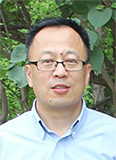
Prof. Z. Zong (ZONG, Zhi)
Dalian University of Technology, China
Research Interests
Fluid Mechanics, Hydrodynamics
Nonlinear water waves and wave-structure interaction
High performance ships
Underwater explosion
Vortex-induced-vibration
Research Awards
1. First Prize, MOE Natural Science Award (2017) / Nonlinear Water Waves in Ocean Engineering
2. First Prize, Dalian City Monograph Award (2017) / Numerical Computation of UNDEX-induced Structural Damage
3. Second Prize, MOE Natural Science Award (2016) / Solitary Waves with applications to South China Sea
4. Second Prize, MOE Science and Tech Progress Award (2006) / Hydrodynamics of Deepwater Gravity-type Fishing Cage
5. Liaoning Province Natural Science Award (2009) / UNDEX-induced Structural Damage Mechanism
6. Second Prize, MOE Natural Science Award (2009) / Nonlinear Water Waves and their Effects on Special Ocean Structures
7. Singapore Defence Prize (1998) / Underwater Shock Technology
8. ISOPE best Paper Award (1994) / Health Monitoring of Ship Structures
Speech Title: Study on Large-Scale High-Speed Trimaran.
Abstract:Ships remain dominant transportation tools even today. 80% international trading is completed through sea transportation. This percentage increases to 90 percent for domestic cargo trading.
A long-standing difficulty with ships is that large-scale ships cannot run fast and running-fast ships cannot be made large-scaled. Therefore, larger and faster ships have been sought by generations of naval architects. The recently-emerging trimaran, formed a main hull with two small outriggers, immediately attracts research interest for its super-high speed up to 40~50 knots with length over 100 meters. This changes sea transportation modes and naval forces greatly as exemplified by the well-known Littoral Combat Ships. In this programme the US navy planned to build over 20 combat ships using trimaran hull forms.
In this report, we will present our recent research in trimaran hull forms with some introduction to its possible applications. First, the background to the new hull forms is introduced followed by experimental studies of ship performances. In the third part we will explain ship motion controls using new-technology. High-speed ships without motion control is hard to be applied in practice. T-foil control is the most efficient control method which can reduce ship peak responses in waves up to 70 % in favorable cases. Stern interceptor is another control method to reduce trim. In the fourth part, a brief introduction to the impact of materials and power plants used onboard trimaran ships. Finally possible applications of trimaran ships are introduced.
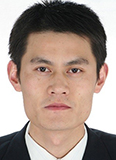
Prof. Chuang Feng
Nanjing Tech University , China
Prof Chuang Feng received his bachelor’s degree in civil engineering from Chang’an University in 2004 and master’s degree in solid mechanics from University of Science and Technology Beijing in 2007. After obtaining PhD degree in Mechanical and Materials Engineering from the University of Western Ontario (Canada) in 2014. Professor Feng started to work as research fellow at RMIT University from 2015 till 2019 and then gained professorship position in Civil Engineering at Nanjing Tech University.
Professor Feng’s research interests are mainly focused on smart materials and structures. He has published more than 30 SCI journal papers, which received more than 1380 google scholar citations with h-index being 18. Among the published papers, three are ESI highly cited and one was selected as IOPselect due to its “novelty, significant and potential impact on future research”. As PI, Professor Feng was granted research funding of nearly 6 million RMB. Also he received several prestigious awards and honors, including Endearvour Research Fellowship from Department of Education of Australia, Discovery Early Career Researcher Award (DERA) from Australian Research Council, Best Paper Award (the only one) from Australian Composite Structure Society, JSPS Research Fellowship, Innovative and Entrepreneurial Talents of Jiangsu Province, Award for Oversea Outstanding Self-financed Graduates and Academic Achievement Scholarship and Western Graduate Thesis Research Funding Award from the University of Western Ontario.
Research Area
Smart Materials and Structures | Mechanics of Composites
Speech Title: Dynamic Response of Graphene Platelets Reinforced Dielectric Composite Structures with Active Tuning.
Abstract:The composites which are reinforced by graphene and its derivatives have demonstrated great potential in developing smart materials and structures. This presentation numerically studies the dynamic responses of graphene platelets (GPLs) reinforced dielectric composite beam, which is subjected to damping, excitation, and electrical field. Required mechanical and physical properties for structural analysis are evaluated by effective medium theory (EMT). Governing equations for the dielectric composite beam are established based on Timoshenko beam theory and nonlinear von Kármán strain-displacement relationship. The governing equations are discretized and numerically solved. The effects of several influencing factors, including the geometry and concentration of GPLs, attributes of electrical field and excitation and damping ratio on the dynamic response of the beam are comprehensively investigated. It is found that the increase of the electrical frequency and voltage decreases the dimensionless amplitude. Reinforcing filler concentration increases beyond a critical value, the dielectrical property and electrical loading plays important role. Beam thickness and reinforcing filler dimension have significant effects. Structural behaviours can be actively tuned. The numerical analysis is envisaged to provide guidelines for the design and optimization for developing smart engineering structures.